ISSN: L 2992-6440
Archives
-
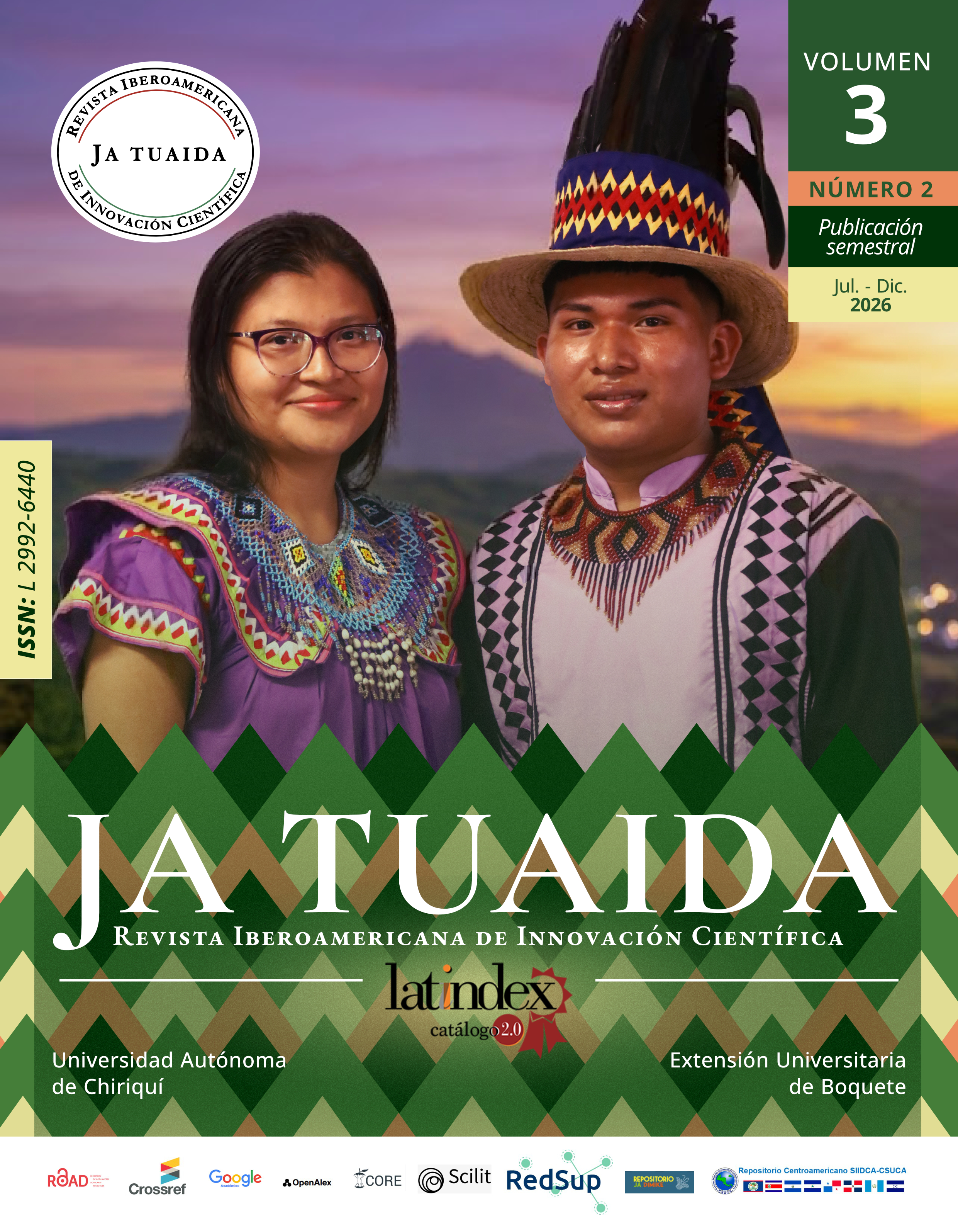
Revista Iberoamericana de Innovación Científica JATUAIDA ( julio a diciembre 2026)
Vol. 3 No. 2 (2026)CARTA EDITORIAL
La Revista Iberoamericana de Innovación Científica JA TUAIDA, de la Universidad Autónoma de Chiriquí, presenta el Volumen 3, Número 2, integrado por seis contribuciones que evidencian la diversidad disciplinaria y temática de la producción científica iberoamericana.
El número inicia con Xander, una propuesta de arquitectura híbrida cuántico-clásica para la detección de intrusiones avanzadas en redes modernas. A continuación, se examinan las prácticas pedagógicas interculturales dirigidas a la inclusión en aulas afrocolombianas diversas y las estrategias didácticas mediadas por inteligencia artificial en la educación básica primaria.
La revisión bibliográfica analiza la relación entre los rasgos de personalidad y las estrategias de afrontamiento del estrés en el personal sanitario. Los ensayos estudian el diseño instruccional como práctica pedagógica en el aprendizaje universitario en línea e híbrido y el valor de las fuentes orales para la reconstrucción de la memoria histórica panameña.
Este número reafirma el compromiso de la revista con la difusión de investigaciones pertinentes, rigurosas y vinculadas con los desafíos educativos, tecnológicos, sanitarios e históricos de la sociedad contemporánea. Expresamos nuestro reconocimiento a los autores, evaluadores y miembros del equipo editorial por su valiosa contribución.
Dra. Nivia Esther Gutiérrez De Gracia
Directora Editorial
-
Revista Iberoamericana de Innovación Científica JATUAIDA ( enero a junio 2026)
Vol. 3 No. 1 (2026)With great satisfaction, we present Volume 3, Issue 1 of the Ibero-American Journal of Scientific Innovation JA TUAIDA, a publication of the Universidad Autónoma de Chiriquí, aimed at promoting the open dissemination of knowledge, well-founded debate, and scientific innovation within the Ibero-American sphere. This issue brings together scientific articles and essays that address current challenges from interdisciplinary perspectives, including ethics in communication and academic recognition; inclusive education; motivation and life projects in educational training; the incorporation of emerging technologies in talent management; and the analysis of public investment in health.
Taken as a whole, these contributions provide evidence, critical reflection, and proposals that enrich decision-making processes and open new lines of research. It is worth highlighting that the authors of this issue demonstrate a sustained commitment to the social relevance of knowledge, argumentative clarity, and conceptual and methodological rigor. Their work not only examines complex phenomena with academic seriousness, but also offers results and perspectives that are valuable to educational, scientific, institutional, and professional communities.
We also acknowledge the work of the reviewers, whose rigorous evaluations were decisive in ensuring the quality of this publication. Their technical observations, improvement suggestions, and critical readings have strengthened the coherence, precision, and robustness of the manuscripts, consolidating the editorial process in accordance with principles of objectivity, responsibility, and academic ethics.
We likewise thank the Editorial Board and the Scientific Committee for their ongoing support and commitment to standards of excellence, as well as the Technical Team for their valuable contribution to editing, standardization, layout, and publication, which has made it possible to present this issue to the community with quality and timeliness.
We cordially invite our readers to explore this volume with a critical spirit and intellectual openness. We trust that the articles and essays presented here will foster academic dialogue, inspire new research, and contribute to the strengthening of responsible and innovative practices.
-
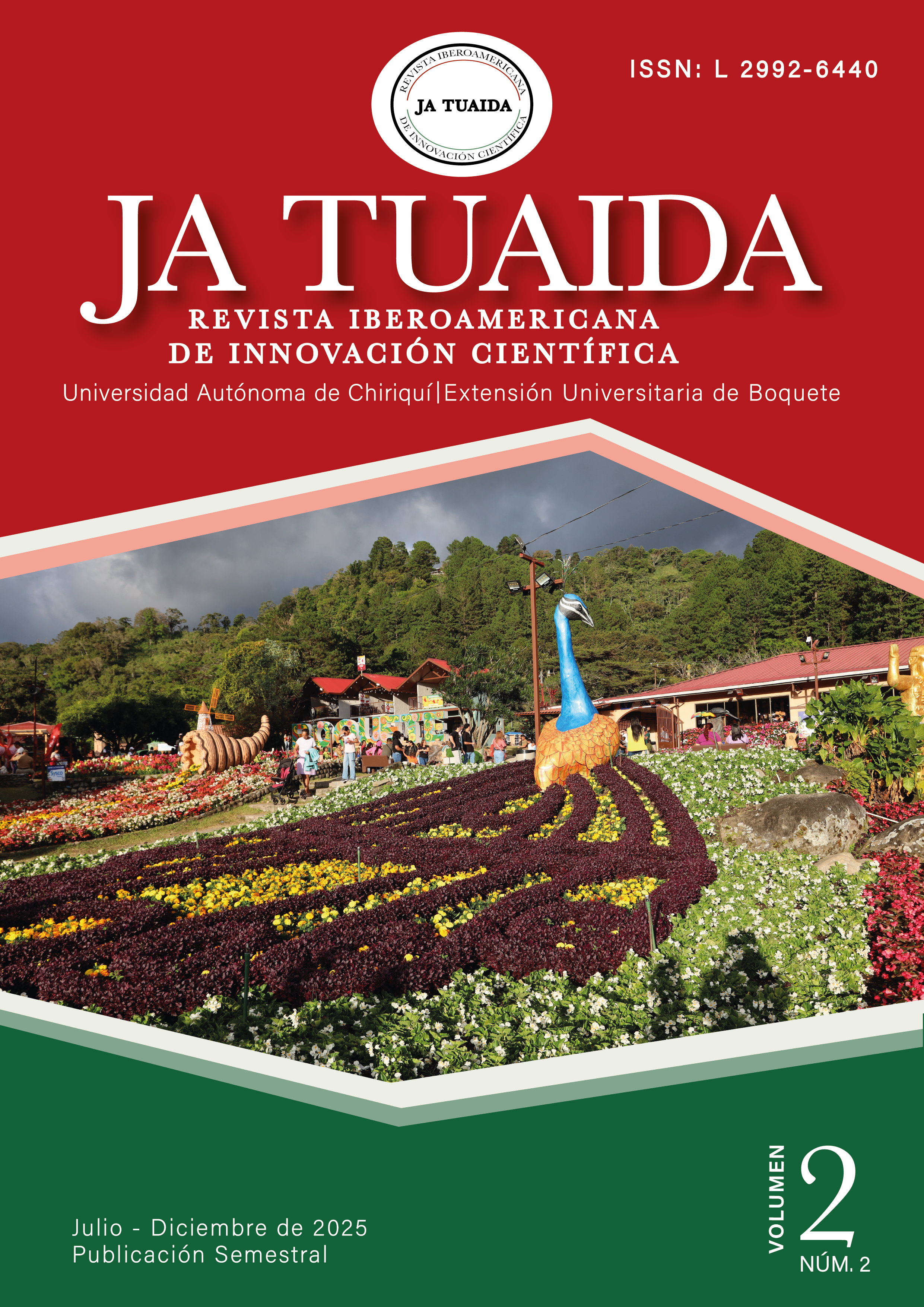
Revista Iberoamericana de Innovación Científica JATUAIDA ( julio a diciembre 2025)
Vol. 2 No. 2 (2025)In this volume, works related to educational research are presented, focusing particularly on pedagogy, technology, resource management, and postgraduate tutoring. A set of texts explores Boasian holistic anthropology in Panama, highlighting the need for an integral approach (archaeology, linguistics, biology, and socio-cultural) to understand human diversity and emphasizing ethics in field research.
The volume also includes works that analyze the transformation of the teaching role in Latin America after the pandemic, proposing the need for a “pedagogy of encounter” that balances technology with ethical principles and the human component. Additionally, a study on teachers’ perception of the use of free-access resources in Colombia is presented, employing a qualitative case study methodology to show how participation and transparency in management directly impact the school climate. Finally, a research study on Generative Artificial Intelligence (GAI) in Mexican secondary schools reveals tensions between its pedagogical potential and structural limitations such as the digital divide and lack of infrastructure.
-
Revista Iberoamericana de Innovación Científica JATUAIDA ( enero-junio 2025)
Vol. 2 No. 1 (2025)It is an honor to present a new edition of the Ibero-American Journal of Scientific Innovation JATUAIDA, reaffirming our commitment to the dissemination of knowledge, innovation, and academic impact across diverse disciplines. In this issue, we bring together high-level research in the fields of education, biotechnology, law, technology, social work, and university outreach, with a focus on their contribution to scientific development and their impact on society.
One of the central themes of this edition is community social work, where author Hertentains highlights the importance of social diagnosis and the implementation of intervention strategies in vulnerable communities. Her analysis emphasizes the fundamental role of the link between academia and society, promoting intervention based on research and social commitment.
In the field of education, the article by Castañeda-Sánchez examines innovation in teaching through the use of conceptual mapping, providing a methodological approach to analyze change processes in education and their impact on academic training.
From a legal perspective, Montenegro Núñez delves into informed consent as a human right in the context of COVID-19 vaccination in Panama. His study analyzes the legal and ethical framework governing patient autonomy, highlighting the importance of access to information and decision-making in public health within a framework of fundamental rights.
Meanwhile, Porras-Díaz investigates the integration of Web 2.0 tools into high school teaching, identifying the challenges and opportunities teachers face in adapting to digital learning environments.
This edition also addresses a crucial topic for higher education: the impact of knowledge socialization in health through university outreach projects, a key aspect of the article by Téllez, Bisset, and Estruch. This study highlights the role of the university in health prevention, framing it within the Sustainable Development Goals (SDGs 2030). The findings show how collaboration between academia and the community strengthens the dialogue of knowledge and expands cooperation networks, generating a tangible impact on the quality of life of the population.
From the scientific and technological field, Pino presents pioneering research on capacity building in genetics and molecular biology, documenting the first DNA isolation and amplification at the Science and Technology Park (PACYT) of the Universidad Autónoma de Chiriquí. This milestone represents a significant step forward in consolidating research in biosciences and training new generations of scientists, reinforcing UNACHI’s role as a benchmark in biomolecular research in the region.
We hope this edition becomes a space for reflection, analysis, and debate for the academic and scientific community, encouraging the generation of new knowledge and the construction of inter-institutional collaboration networks. We extend our deepest gratitude to the authors, reviewers, the editorial and scientific committees, as well as our working team, for their invaluable contribution to consolidating this journal as a reference medium in scientific dissemination.
Sincerely,
Dr. Nivia Esther Gutiérrez-De Gracia
Editor-in-Chief -
Revista Iberoamericana de Innovación Científica JATUAIDA ( julio- diciembre 2024)
Vol. 1 No. 2 (2024)It is an honor for me, as Editor-in-Chief of the Ibero-American Journal of Scientific Innovation JATUAIDA, to present the second issue of our first volume. We reaffirm our commitment to excellence in research, scientific innovation, and making information accessible to all.
In this edition, we address crucial topics for educational and scientific development, highlighting educational inclusion through the use of virtual laboratories. The articles presented explore how these digital tools are transforming science education in both rural and urban contexts, facilitating access to high-quality educational resources and reducing the economic and geographic barriers that have historically limited many communities.
An essay included in this issue illustrates the impact of virtual laboratories on the educational inclusion of secondary and high school students in a rural institution. This work analyzes the advantages and disadvantages of virtual laboratories and how they can be a cost-effective and accessible alternative for institutions with infrastructure and resource limitations.
Another article examines the relationship between assertive communication and virtual teaching, revealing that such communication is crucial for the success of the teaching-learning process in virtual settings. It highlights the importance of teachers mastering this type of communication to interact effectively with students.
Additionally, a systematic review on social happiness as a foundation for public policy design is included. This work categorizes the variables interrelated with happiness, identifying the need for a multidimensional approach and the integration of subjective well-being into the governmental agenda.
The issue also addresses the social responsibility of rural teachers in Latin America, underscoring the challenges and opportunities faced by educators in rural contexts. This essay emphasizes the importance of integrating information and communication technologies (ICT) into rural education and the need for continuous training and access to technological resources.
A study on the presumption of paternity within Ecuador’s legal framework explores how this principle relates to the best interest of the child, highlighting its relevance in family relations and its impact on the protection of children’s rights.
We hope that the articles presented here will inspire you to contribute to our journal. We extend our gratitude to our Editorial Board, Scientific Committee, all authors, reviewers, and collaborators who have made this issue possible.
Sincerely,
Dr. Nivia Esther Gutiérrez-De Gracia
Editor-in-Chief -
Revista Iberoamericana de Innovación Científica JATUAIDA ( enero-junio 2024)
Vol. 1 No. 1 (2024)It is our pleasure to present the inaugural issue of the Ibero-American Journal of Scientific Innovation JATUAIDA of the Universidad Autónoma de Chiriquí. This academic publication aims to foster the exchange of ideas and promote scientific advancement in the Ibero-American region. Through this first volume, we express our commitment to academic excellence, research ethics, and the dissemination of knowledge.
In this regard, the issue presents articles that provide significant contributions in their respective disciplines, which we trust will capture the interest of and be highly valued by the scientific and academic community in Ibero-America.
We would like to express our most sincere gratitude to all the authors, reviewers, and editors whose dedication has made the publication of this first issue possible. Our aspiration is for the Ibero-American Journal of Scientific Innovation JATUAIDA to become a benchmark for the dissemination of scientific innovation in the region.
Dr. Nivia Esther Gutiérrez-De Gracia
Editor-in-Chief