ISSN: L 2992-6440
About the Journal
The Ibero-American Journal of Scientific Innovation JA TUAIDA is an open-access electronic journal created in 2023 and edited by a group of professors and researchers from the University Extension of Boquete at the Universidad Autónoma de Chiriquí, along with renowned national and international researchers. It is published semiannually and follows a double-blind peer review process.
Thematic coverage: Multidisciplinary.
Administration, human resources, finance, accounting, tourism, languages, education, sociology, psychology, neurosciences, law, anthropology, economics, political science, social work, communication, information and communication technologies, philosophy, and innovation.
Target audience: The journal is mainly addressed to professionals, researchers, professors, and university students, both nationally and internationally, in the different disciplines of Social and Human Sciences.
Periodicity: Semiannual publication (January–June and July–December each year).
ISSN: L 2992-6440
Current Issue
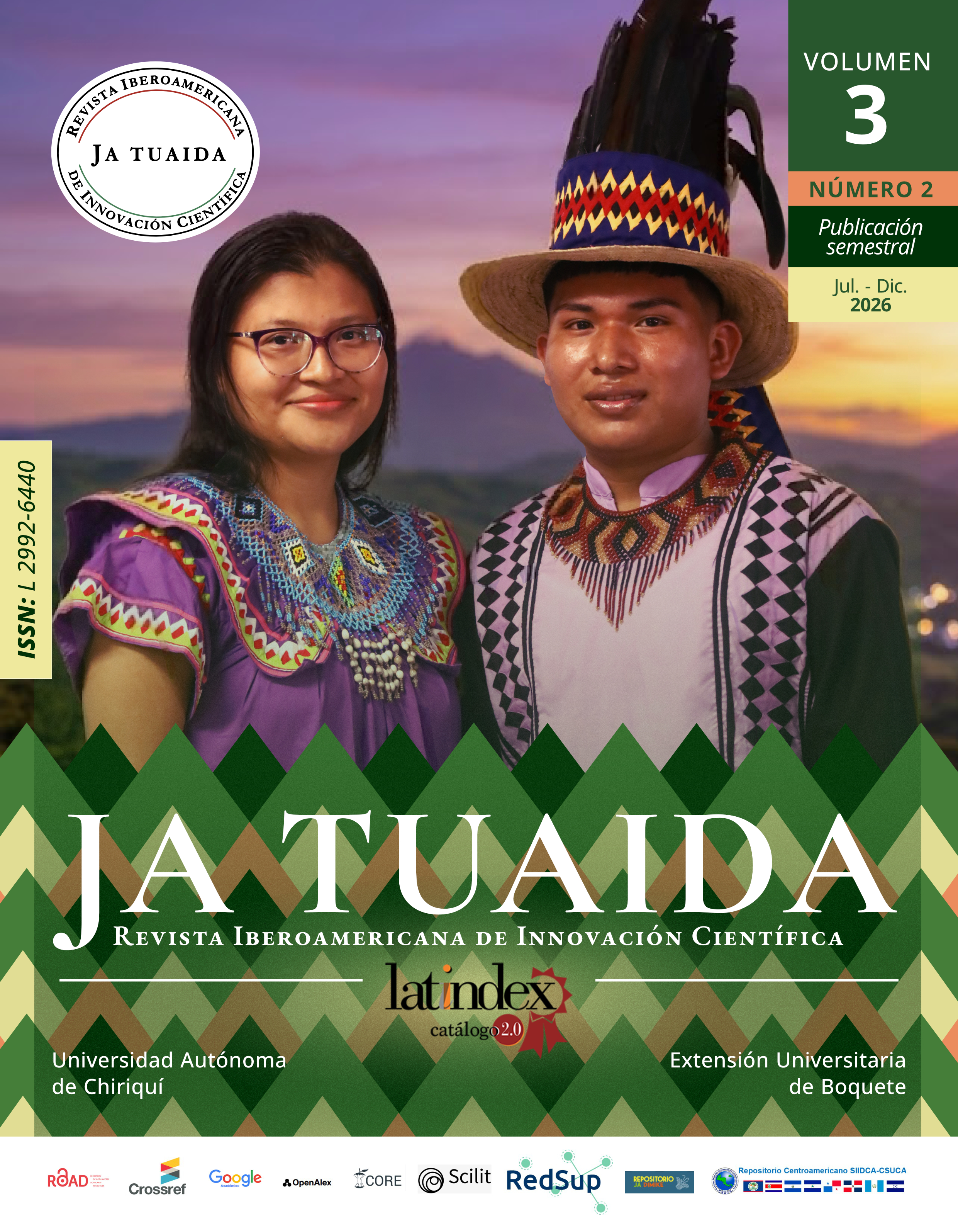
Vol. 3 No. 2 (2026): Revista Iberoamericana de Innovación Científica JATUAIDA ( julio a diciembre 2026)
CARTA EDITORIAL
La Revista Iberoamericana de Innovación Científica JA TUAIDA, de la Universidad Autónoma de Chiriquí, presenta el Volumen 3, Número 2, integrado por seis contribuciones que evidencian la diversidad disciplinaria y temática de la producción científica iberoamericana.
El número inicia con Xander, una propuesta de arquitectura híbrida cuántico-clásica para la detección de intrusiones avanzadas en redes modernas. A continuación, se examinan las prácticas pedagógicas interculturales dirigidas a la inclusión en aulas afrocolombianas diversas y las estrategias didácticas mediadas por inteligencia artificial en la educación básica primaria.
La revisión bibliográfica analiza la relación entre los rasgos de personalidad y las estrategias de afrontamiento del estrés en el personal sanitario. Los ensayos estudian el diseño instruccional como práctica pedagógica en el aprendizaje universitario en línea e híbrido y el valor de las fuentes orales para la reconstrucción de la memoria histórica panameña.
Este número reafirma el compromiso de la revista con la difusión de investigaciones pertinentes, rigurosas y vinculadas con los desafíos educativos, tecnológicos, sanitarios e históricos de la sociedad contemporánea. Expresamos nuestro reconocimiento a los autores, evaluadores y miembros del equipo editorial por su valiosa contribución.
Dra. Nivia Esther Gutiérrez De Gracia
Directora Editorial
Published:
2026-07-31