ISSN: L 2992-6440
Vol. 2 No. 1 (2025): Revista Iberoamericana de Innovación Científica JATUAIDA ( enero-junio 2025)
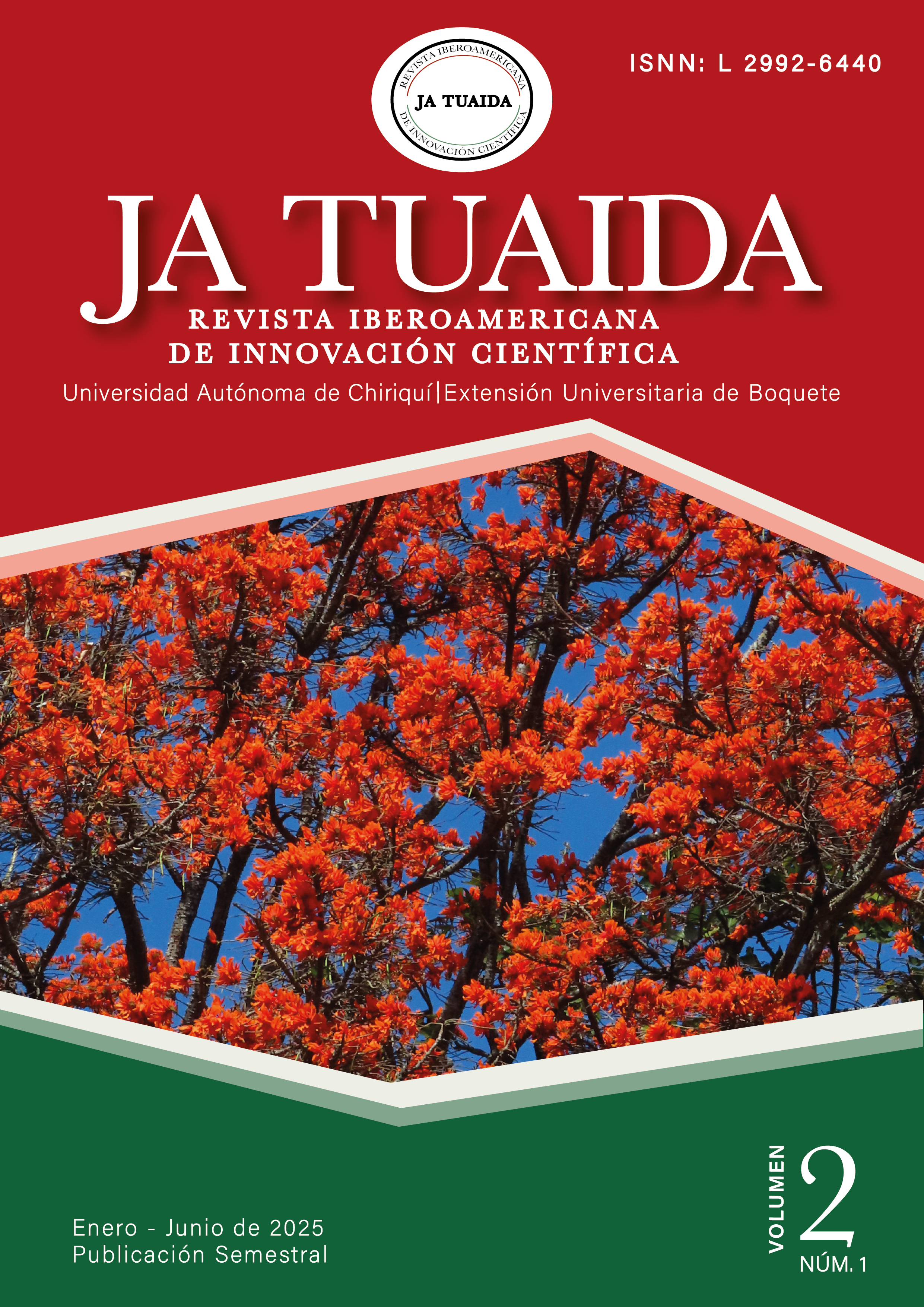
It is an honor to present a new edition of the Ibero-American Journal of Scientific Innovation JATUAIDA, reaffirming our commitment to the dissemination of knowledge, innovation, and academic impact across diverse disciplines. In this issue, we bring together high-level research in the fields of education, biotechnology, law, technology, social work, and university outreach, with a focus on their contribution to scientific development and their impact on society.
One of the central themes of this edition is community social work, where author Hertentains highlights the importance of social diagnosis and the implementation of intervention strategies in vulnerable communities. Her analysis emphasizes the fundamental role of the link between academia and society, promoting intervention based on research and social commitment.
In the field of education, the article by Castañeda-Sánchez examines innovation in teaching through the use of conceptual mapping, providing a methodological approach to analyze change processes in education and their impact on academic training.
From a legal perspective, Montenegro Núñez delves into informed consent as a human right in the context of COVID-19 vaccination in Panama. His study analyzes the legal and ethical framework governing patient autonomy, highlighting the importance of access to information and decision-making in public health within a framework of fundamental rights.
Meanwhile, Porras-Díaz investigates the integration of Web 2.0 tools into high school teaching, identifying the challenges and opportunities teachers face in adapting to digital learning environments.
This edition also addresses a crucial topic for higher education: the impact of knowledge socialization in health through university outreach projects, a key aspect of the article by Téllez, Bisset, and Estruch. This study highlights the role of the university in health prevention, framing it within the Sustainable Development Goals (SDGs 2030). The findings show how collaboration between academia and the community strengthens the dialogue of knowledge and expands cooperation networks, generating a tangible impact on the quality of life of the population.
From the scientific and technological field, Pino presents pioneering research on capacity building in genetics and molecular biology, documenting the first DNA isolation and amplification at the Science and Technology Park (PACYT) of the Universidad Autónoma de Chiriquí. This milestone represents a significant step forward in consolidating research in biosciences and training new generations of scientists, reinforcing UNACHI’s role as a benchmark in biomolecular research in the region.
We hope this edition becomes a space for reflection, analysis, and debate for the academic and scientific community, encouraging the generation of new knowledge and the construction of inter-institutional collaboration networks. We extend our deepest gratitude to the authors, reviewers, the editorial and scientific committees, as well as our working team, for their invaluable contribution to consolidating this journal as a reference medium in scientific dissemination.
Sincerely,
Dr. Nivia Esther Gutiérrez-De Gracia
Editor-in-Chief
Published:
2025-01-31